
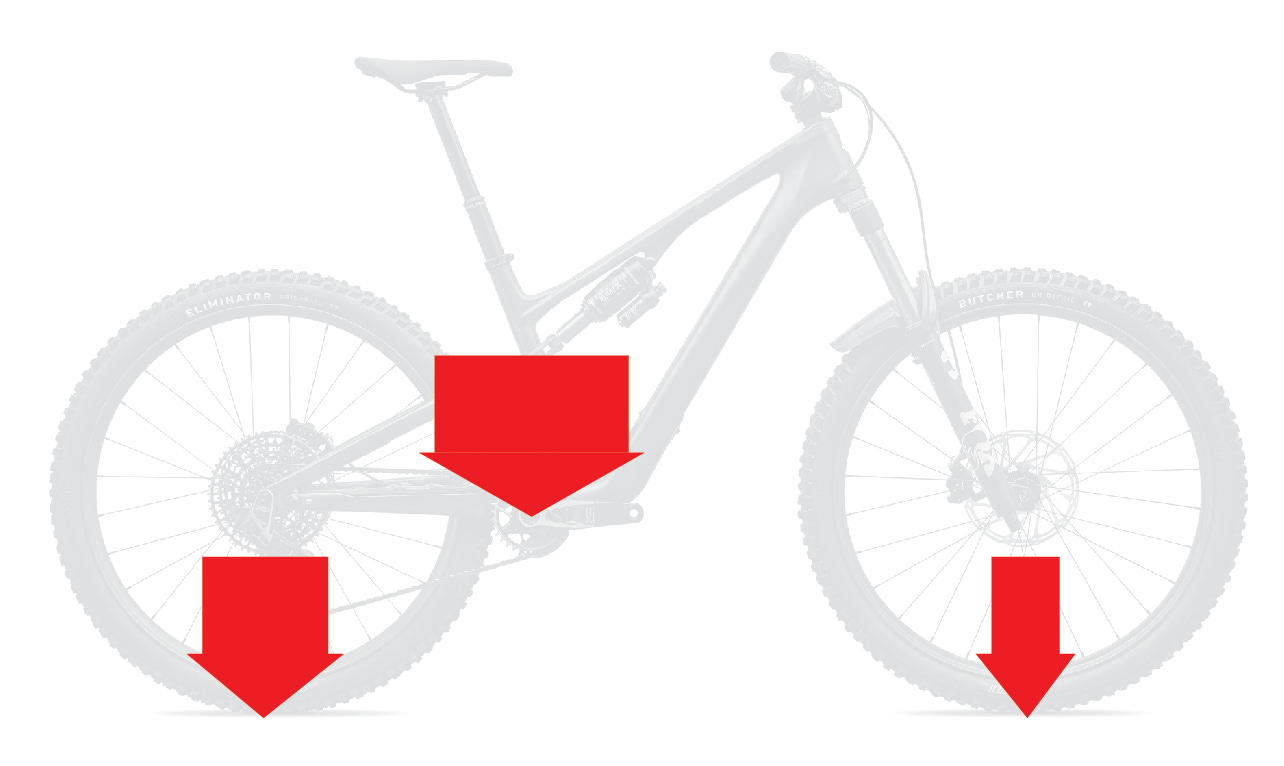
Fore-aft weight balance is one of the most important factors in designing a vehicle. Is the weight mostly in front, in back, or in the middle?
Do you want the front to skim while the rear digs in, or the front to carve while the rear drifts, or do you want both ends to track together?
Time for some infographics fun. In general:
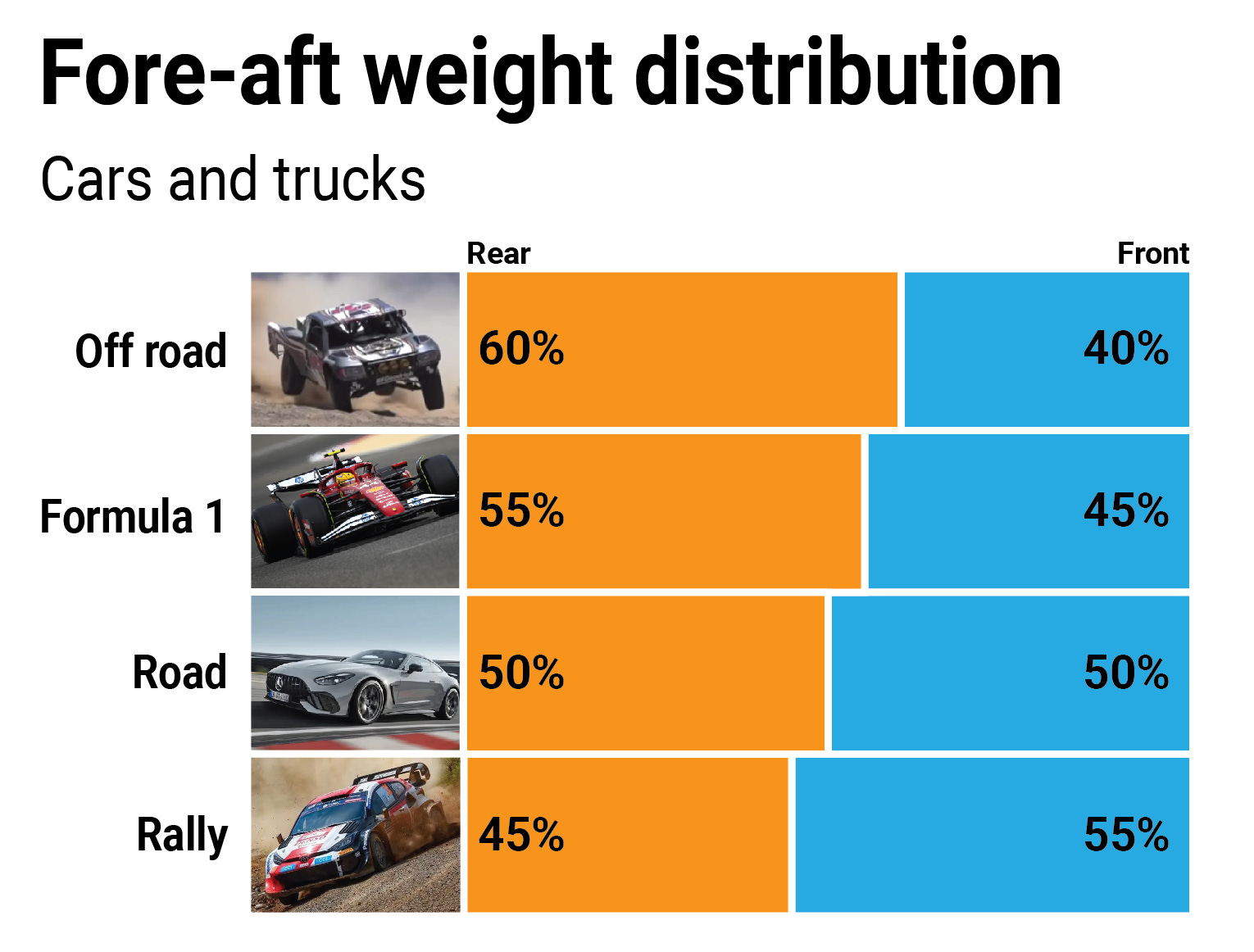
Trophy trucks have rearward weight bias to hammer across the desert. F1 cars are mandated to have heavier rear ends. The best-handling road cars have perfect balance. Rally cars have forward weight bias to hook up in corners.
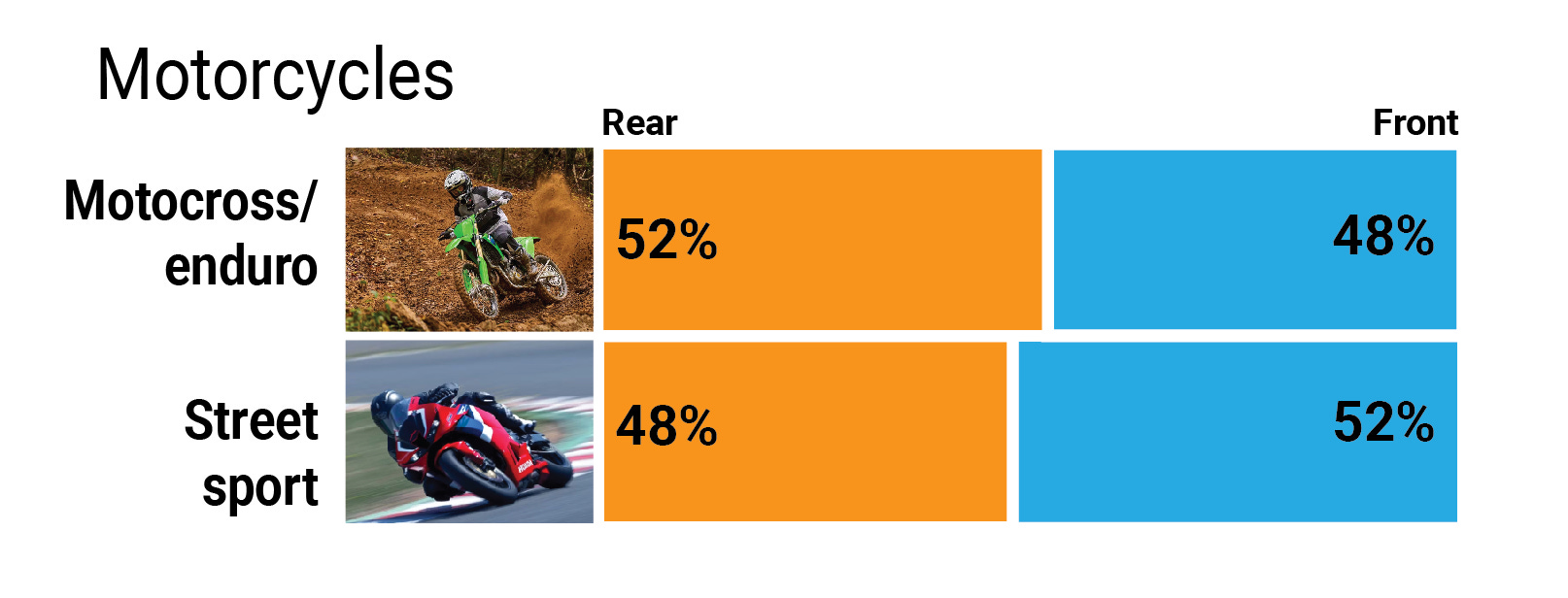
Performance-oriented motorcycles are finely balanced, with slight rearward bias off road and slight forward bias on road. Motocross and enduro bikes are extremely capable on a wide range of terrain, from groomed tracks to the gnarliest trails you can imagine.
Now let’s look at bicycles. In general, size medium:
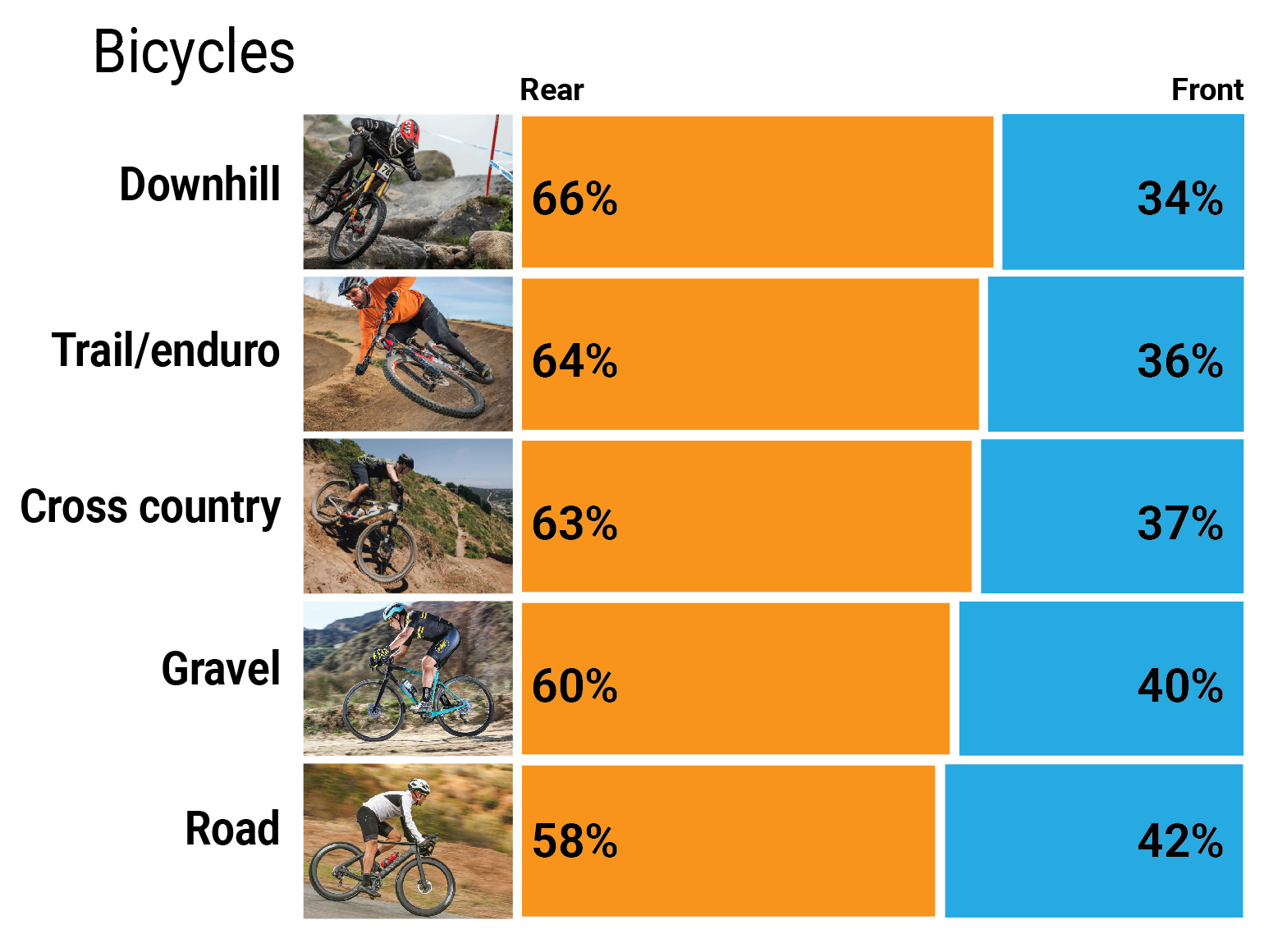
Compared to cars, trucks and motorcycles, mountain bikes have a significant rearward weight bias. Especially as you move into more “extreme” niches like downhill.
Since bikes don’t have much mass compared with their riders, and the rider’s weight should always be in the feet, bike fore-aft balance can be calculated like this:
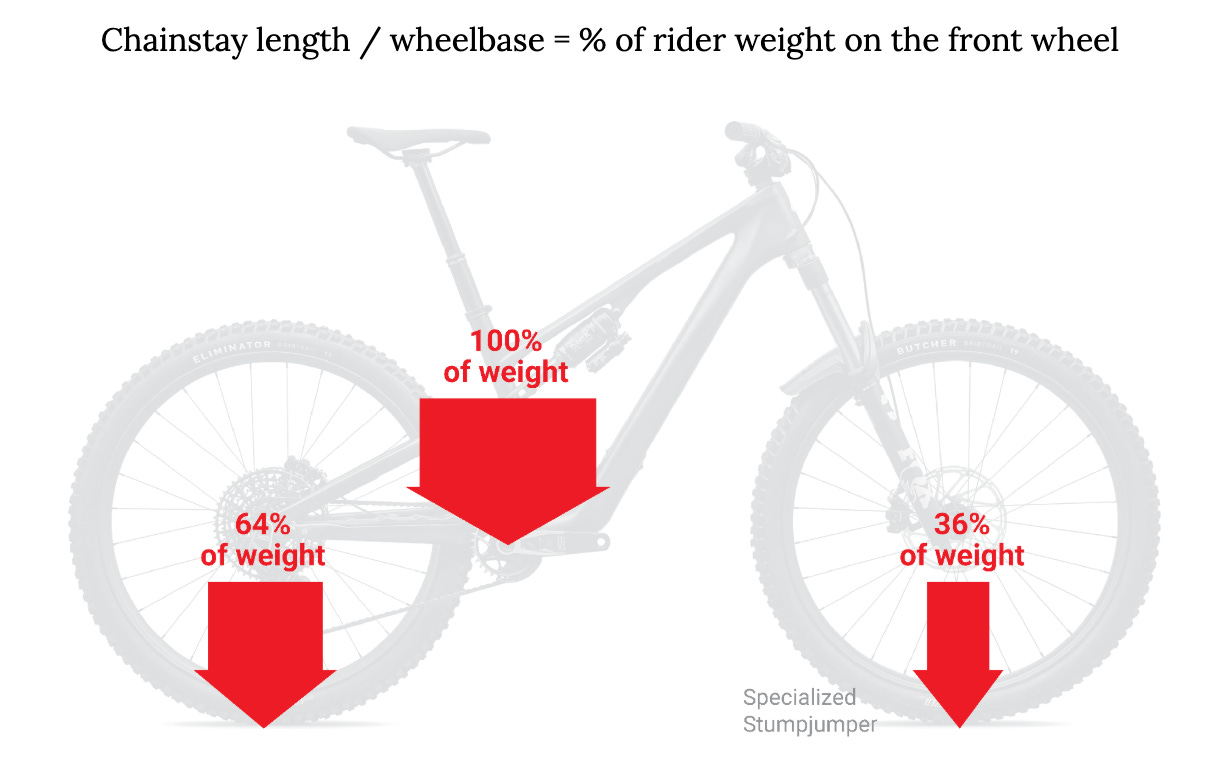
Why do mountain bikes have such rearward weight bias? What are the pros and cons?
