
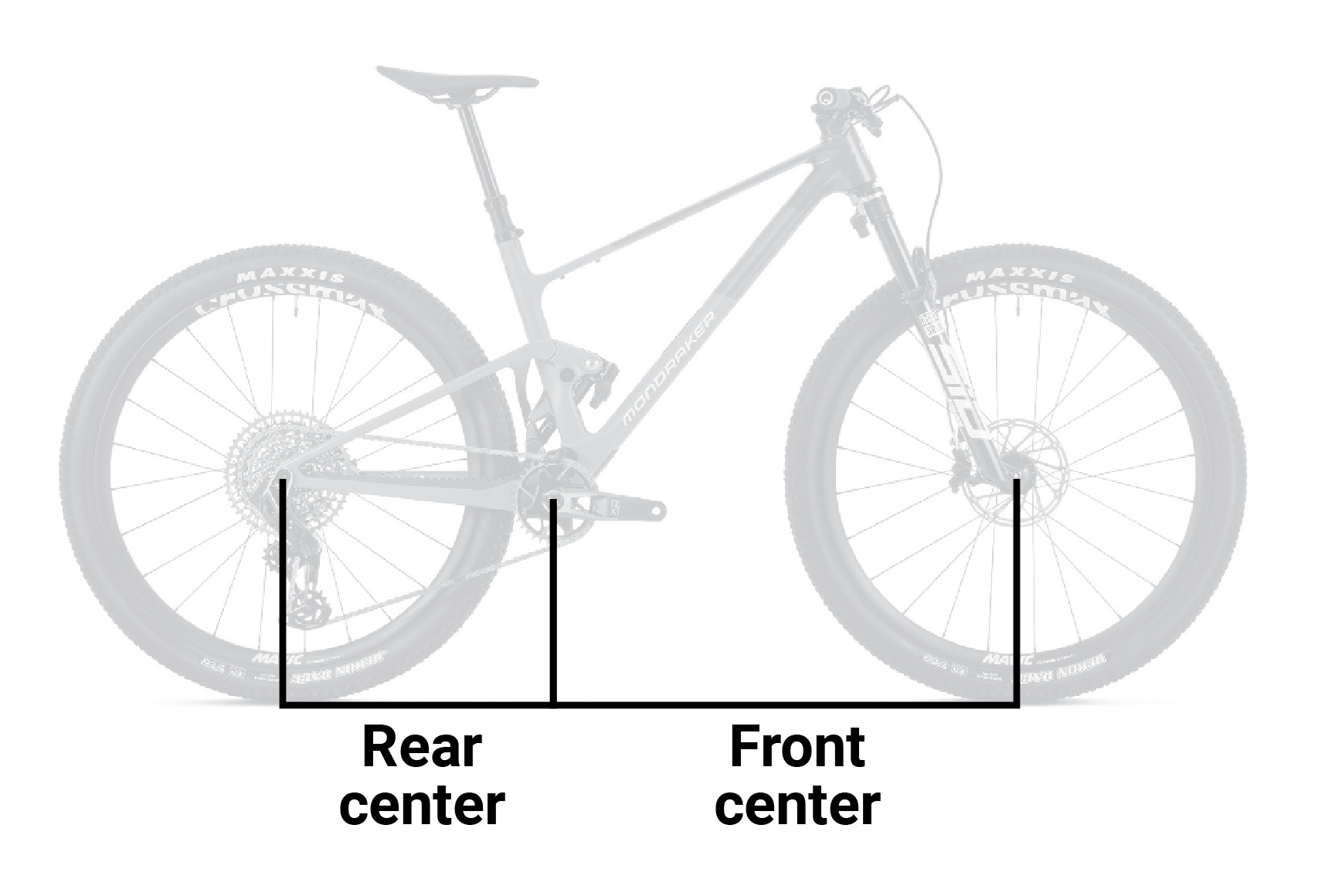
In a discussion on the www.llbmtb.com member site about the Mondraker F Podium in size M or L, Maksim asked:
Lee,
One more question (because I can’t find clear answer in internet): in your opinion, what’s easier when climbing – longer front-center or shorter front-center?
Maksim
Hi Maksim,
This seems like such an innocent question, but it’s not!!! It brings up frame reach, seated reach and the ultimate complication: rider ability. To keep this simple I’ll focus on the simple geometry question:
How does front-center affect climbing?
To remind everyone, front-center is the horizontal distance from the bottom bracket to the front hub. Rear-center is the distance from the bottom bracket to the rear hub. A quick diagram …
In almost 40 years of riding, racing, teaching and making mountain bikes, the idea that a longer front-center might improve climbing performance has honestly never occurred to me. But I see it on the Mondraker marketing site:
The advantages and key features of FORWARD GEOMETRY are improved safety and confidence when descending at speed combined with sharper, more direct handling and better tracking; plus, more stability on technical climbs and rough terrain combined with better grip and improved control.
How does a longer front center increase stability on technical climbs?
Does it?
